
Let’s talk about the real danger of AI—not the sci-fi robot uprising, not “AI taking all our jobs,” but something far quieter and far more damaging:
We’re breaking the centuries-old relationship between experts and novices.
This relationship is how humans have always built skill: apprenticeships, mentorships, internships, residencies—you name it. One generation learns by working beside another. Simple.
But AI is quietly snapping that bond in half.
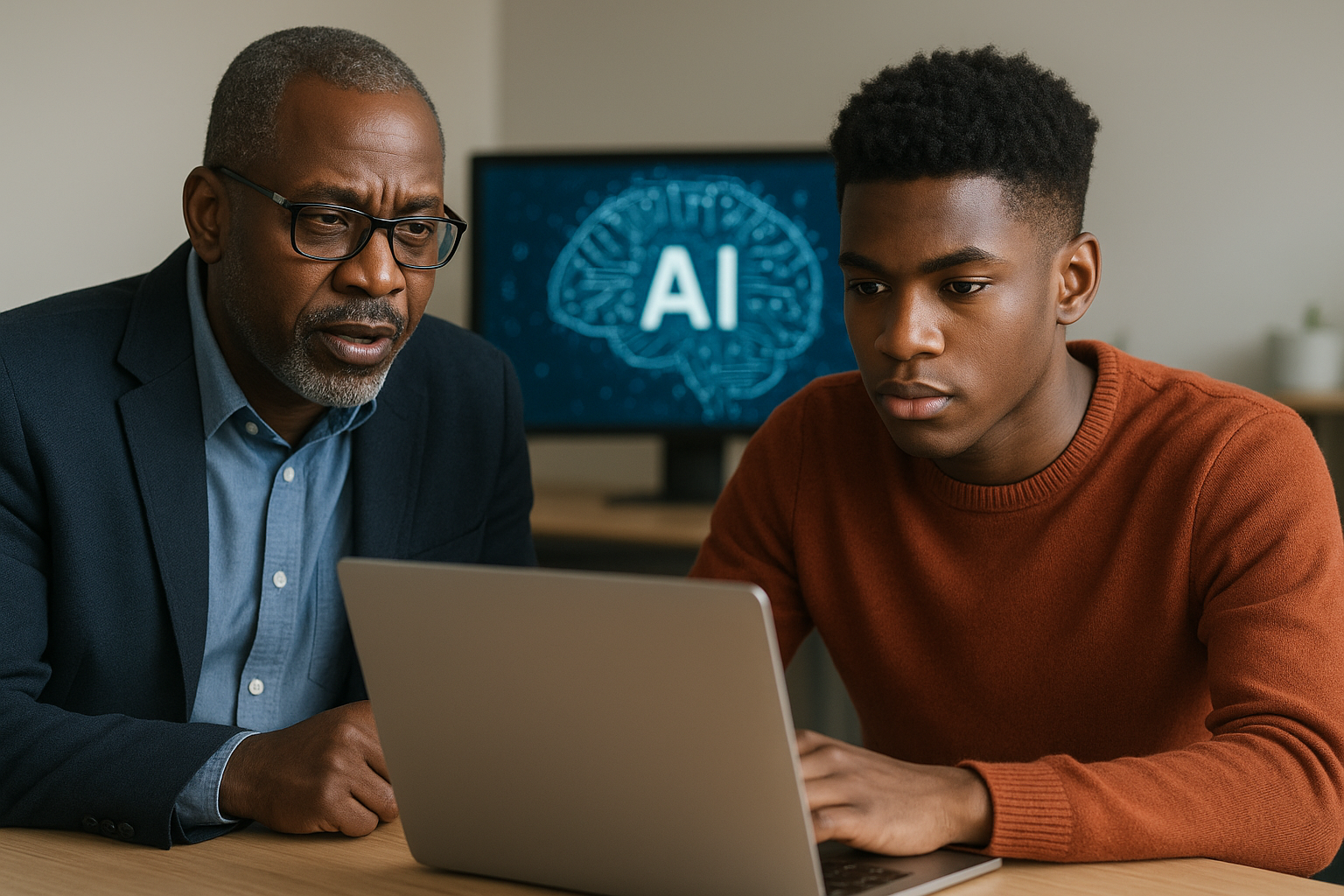
How Skills Are Traditionally Built (and Why It’s Falling Apart)
Think about how learning actually works in the real world:
- A novice tries tasks just hard enough to stretch them.
- An expert stands nearby, guiding, correcting, and adding nuance.
- Over time, the novice handles more complex tasks, eventually becoming the next expert.
This cycle—learn, practice, refine—is how every craft exists, from carpentry to surgery to software engineering.
Enter Generative AI.
Suddenly, the expert doesn’t need a novice anymore.
Why slow down a senior engineer or lawyer with a junior hire when AI can draft the code, write the memo, prep the analysis, or generate the first 80% of the work—instantly?
Many experts have come to the same conclusion:
“Why involve a novice who will slow things down? I wouldn’t. I don’t.”
That sentence represents the collapse of skill development as we know it.
Real-World Evidence: It’s Already Happening
This isn’t speculation. The disruption is measurable and visible.
1. Robotic Surgery Is Gutting Surgical Training
A junior surgeon who used to spend four hours assisting now gets 10–15 minutes of involvement.
The machine does the rest.
Their participation is now optional.
Optional participation → Optional experience → Optional expertise.
You see the problem.
2. AI-Heavy Roles Are Shrinking
Occupations where AI handles a large portion of tasks saw a 14% decline in workers in just five years.
Less work for humans = fewer positions = fewer entry-level opportunities.
3. Entry-Level Jobs Are Disappearing
Companies are cutting:
- middle managers
- junior analysts
- legal interns
- new developers
- and basically anyone who used to “learn by doing”
Because AI can do the first draft of everything.
The Core Problem: A Massive Market Failure
Every company is trying to save money today.
And in doing so, they’re destroying the talent they’ll need tomorrow.
Here’s the brutal truth:
If you remove Level 1 and Level 2 jobs, you kill Level 3 expertise.
You cannot magically promote someone into senior roles without years of lower-stakes practice.
No one becomes:
- a courtroom-ready lawyer,
- a confident surgeon,
- a strategic project lead,
- or a trusted advisor
…by jumping straight in at the deep end.
Yet that’s the workforce scenario we’re engineering.
The Poaching Paradox
Companies are scared to invest in training because a competitor might poach their newly skilled workers.
So what happens?
No one trains anyone.
Result?
A self-inflicted talent drought.
And we’re already seeing the signs:
- 63% of employers expect skills gaps to hinder major transformation.
- 42% expect talent availability to drop between 2025–2030.
What Needs to Happen: A Full Workflow Rethink
If companies want long-term survival—not just short-term savings—they must redesign how work gets done.
1. Rebuild Workflows to Include Novices
AI should support the expert–novice bond, not replace it.
This means deliberately inserting early-career workers into workflows and using AI to reduce friction, not eliminate participation.
“Cleanup is harder than prevention.”
If we allow the pipeline to collapse, rebuilding it will take decades.
2. Teach Meta-Skills
Instead of training people on specific tools that will be obsolete in two years, we must teach:
- How to learn
- How to adapt
- How to think critically
- How to solve ambiguous problems
Meta-skills age well, even when technologies don’t.
3. Public Policy Must Step In
Because companies won’t fix this on their own.
When everyone fears poaching, no one trains.
That’s a classic collective-action problem—and collective-action problems need outside intervention.
Intermediaries, incentives, and public workforce programs may be the only way out.
Final Thought: AI Isn’t Killing Jobs—It’s Killing Expertise
If we don’t act now, the long-term consequence won’t be unemployment.
It’ll be a world starving for skilled workers, where “senior talent” simply doesn’t exist anymore.
AI is powerful.
But without novices in the pipeline, we’re heading for an expertise recession.
And unlike economic recessions, this one will take a generation to fix.
